
Five Warning Signs Your Ignition Is Failing
Ignition barrels rarely fail without notice. These are the symptoms owners describe in the weeks before the car finally refuses to start.
- AVG Same Day Service
- DBS Checked
- 5★ Reviews
Not A National Company
A local business, not a call centre.
Real Local Professionals
Locals, not technicians sent by a middle-man company.
No Inflated Pricing
National companies often mark prices up 2–3x. We don't.
Deal Direct With The Technician
No wondering who or when. It's always us.
Sticking, jiggling, a key that will not come out, flickering electrics and free play
A failing ignition gives warning. The key starts to need encouragement, works better in one position than another, becomes hard to remove, causes dashboard flicker as it moves, or develops noticeable play in the barrel. Any of these getting worse over weeks means the lock needs attention before it strands you.
Sign One: The Key Needs Encouragement
It used to turn in one clean movement; now it needs a push, a wiggle or a second attempt.
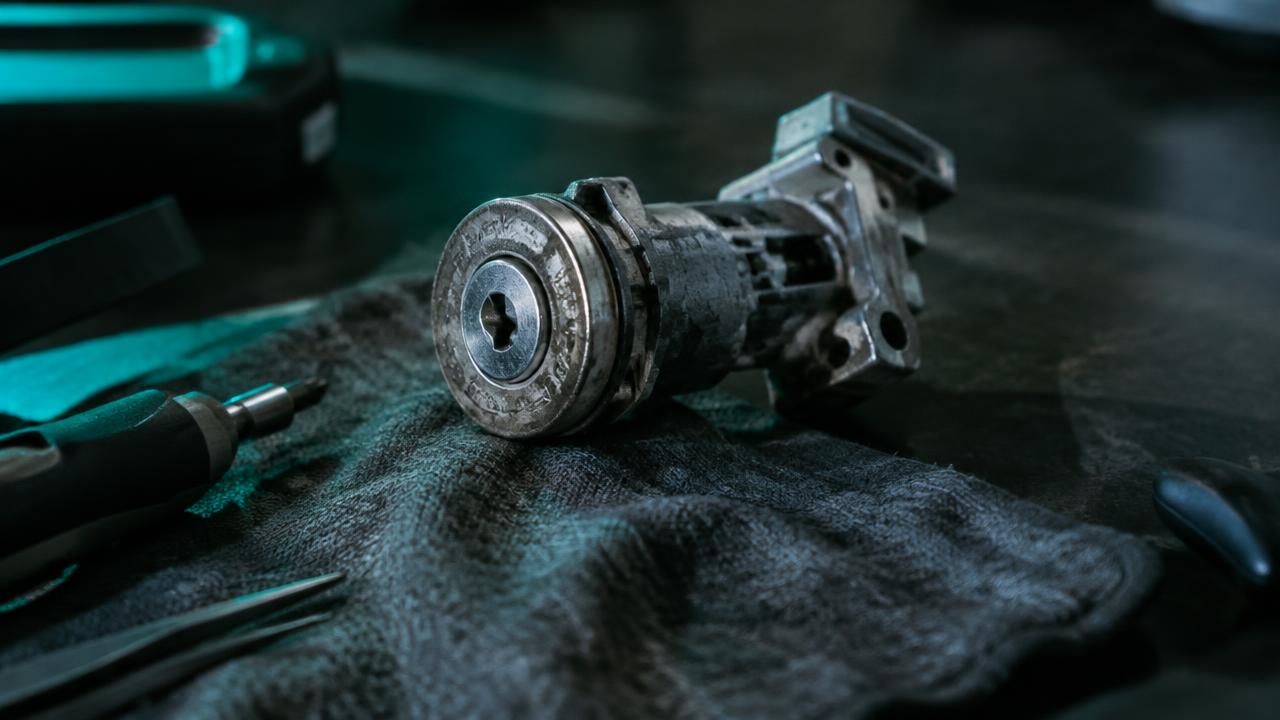
This is wear inside the barrel, and it is progressive. The wafers and the blade have worn against each other over years of use, and the tolerances that made the action crisp have gone.
Test it against your spare. If the spare is noticeably better, the key has worn and may be the cheaper fix. If both are equally stiff, the barrel is the problem.
The Other Four Signs
Any one of these on its own is worth noting. Two together is a booking.
The key will not come out
A key that catches on the way back to the off position, or needs the wheel moved before it releases, indicates the mechanism is no longer returning cleanly.
Dashboard flicker as the key moves
Warning lights that blink as you nudge the key suggest the electrical switch behind the barrel is losing solid contact. That can cut power at an inconvenient moment.
Free play in the barrel
If the whole assembly moves or feels loose in the column, internal components are worn or the housing is failing. This tends to deteriorate quickly.
It only works cold, or only works warm
Temperature-dependent behaviour points at worn tolerances or a tired electrical contact. It is the sort of fault that becomes permanent without warning.
Why Waiting Costs More
A sticking ignition is a planned job. A snapped key in a dead barrel, in a car park, is not.
Deal with it early and the vehicle can be worked on where and when it suits you. Leave it, and the failure will pick its own moment — usually the one where the car is somewhere inconvenient and you are in a hurry.
There is also a real risk of the key breaking in a worn barrel, because a lock that resists invites more force. Extraction adds work to a job that was already needed.
Repair Or Replace?
It depends on which part has worn, and on what the vehicle allows.
Where the wear is confined to the lock components, a repair can restore normal action. Where the housing or the electrical switch behind it has failed, replacement is the sound answer.
When a barrel is replaced, the aim is to keep your existing key working with it wherever the design permits, so you are not left carrying one key for the doors and another for the ignition. Whether that is possible depends on the vehicle, and we will tell you before starting.
Repair Or Replace The Barrel
Both are legitimate outcomes, and which one applies depends on what has actually worn.
A barrel that is stiff because it is dirty, dry or lightly worn can often be stripped, cleaned and reassembled with the correct lubricant. That keeps your existing key working, which is the neat result when the key itself is in good order and the vehicle has no other lock problems.
A barrel with broken wafers, a damaged cam or wear far enough along that it turns with the wrong key is replaced. A new barrel usually comes with its own key pattern, so the practical question becomes whether to key it to match your existing keys or to accept a separate key for the ignition. Matching is generally worth it on a car you intend to keep.
The judgement is made on the vehicle, not over the phone. What we can say beforehand is that ignoring it is the one option that reliably gets more expensive — a barrel that is merely stiff today is a barrel that strands someone in a car park later.
Habits That Wear An Ignition Out Early
Most premature barrel wear comes from the same handful of causes.
A heavy keyring
House keys, fobs and a bottle opener hanging from the ignition apply constant downward load while you drive. It is the biggest single cause.
Grit on the blade
A key carried loose in a pocket picks up abrasive dust and carries it into the lock every time it goes in.
The wrong lubricant
Oil and general-purpose sprays attract dirt and turn it into paste inside the barrel. A dry graphite or PTFE product is the correct choice.
Forcing a worn key
A key that has lost its profile puts uneven load on the wafers. Replacing a tired key early protects the barrel behind it.
Ignition wear questions
Get a free quote in two quick steps
Send your details and we'll call you back with a price. For anything urgent, just call.
- Price explained before any work
- No upfront payment
- Deal direct with the technician
Ignition starting to stick?
Deal with it while the car still starts. Send your registration and a description of what it is doing for a quote.
“Great lad just sorted out my wife's electronic steering lock on Mercedes highly recommend.”