
Why Won't My Car Key Turn In The Ignition?
Before assuming the ignition has failed, work through the causes in order — the most common one costs nothing to fix.
- AVG Same Day Service
- DBS Checked
- 5★ Reviews
Not A National Company
A local business, not a call centre.
Real Local Professionals
Locals, not technicians sent by a middle-man company.
No Inflated Pricing
National companies often mark prices up 2–3x. We don't.
Deal Direct With The Technician
No wondering who or when. It's always us.
Usually the steering lock, a worn key, or a barrel beginning to fail
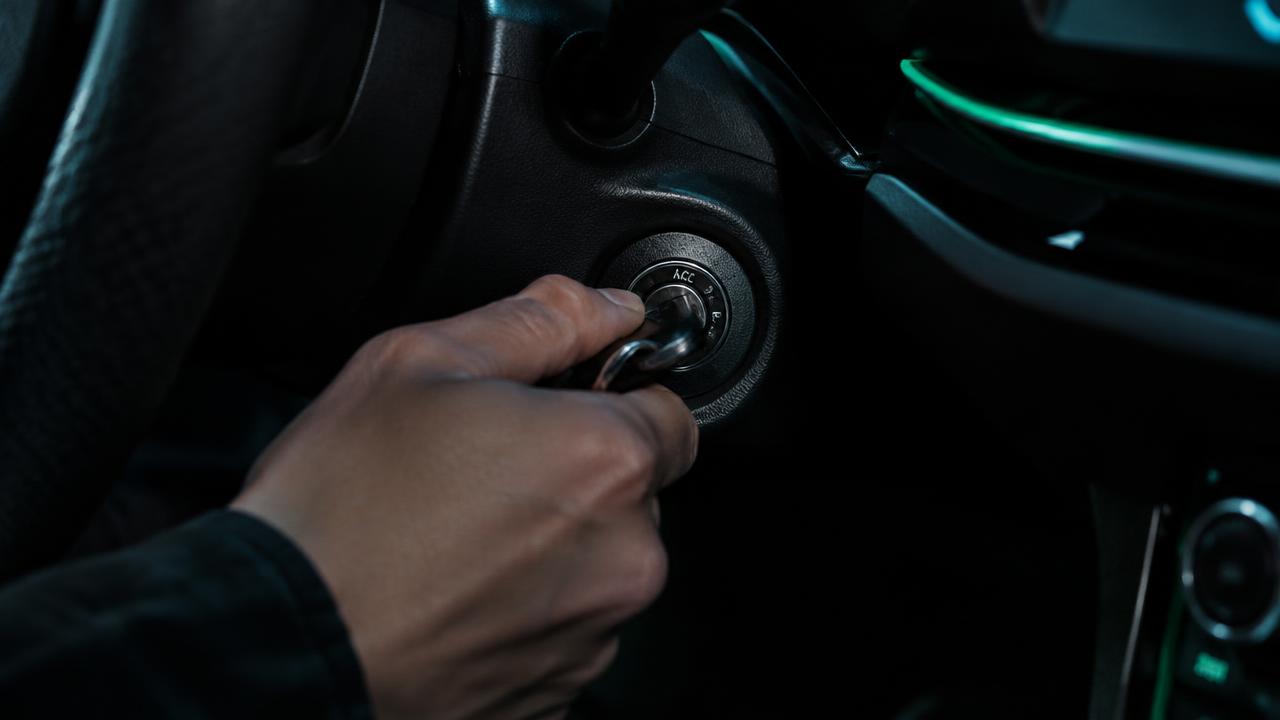
Start with the steering lock: rock the wheel gently left and right while turning the key with light pressure. If that fails, check the gear selector is fully in park or neutral. If the key still will not move, stop forcing it — a worn key or a failing barrel gets worse fast, and a snapped key turns a small job into a large one.
Start With The Steering Lock
A wheel under tension against the steering lock will hold the key solid, and it is by far the most common cause of this call.
It happens when the car is parked on a slope, or with the wheels turned against a kerb, and the weight of the vehicle loads the locking pin. The key physically cannot rotate while that load is on it.
The fix is gentle: hold light turning pressure on the key while rocking the steering wheel a small distance each way. The moment the load releases, the key turns. Do not lever the key or use a tool for grip — that is how keys break.
Work Through These In Order
Each of these is worth ruling out before anyone is called, and none of them risks damage.
Gear selector position
Automatics generally will not release the key or allow a turn unless the selector is properly in park. Nudge it firmly into position and try again. Manuals are usually unaffected.
The condition of the key
Compare it against the spare. A blade with rounded edges no longer lifts the wafers fully. If the spare turns freely and the usual key does not, the key is the problem, not the car.
Something in the barrel
Pocket debris, grit or a bent blade can obstruct the lock. Never spray oil into an ignition — it attracts dirt and makes the eventual repair worse.
The barrel itself
Sticking that has been getting gradually worse over weeks, or a key that needs jiggling to work, points at wear inside the lock rather than at the key.
The Point At Which To Stop
If the key needs real force, stop. A snapped key inside an ignition barrel is a much bigger job than the one you started with.
Key steel is hard but thin, and the weak point is where the blade meets the head. Once it breaks in the barrel, the broken section has to be extracted before anything else can happen, and the extraction has to be done without scoring the wafers.
It is also worth knowing that a car which has needed a wiggle to start for a while is giving you notice. That is the cheap moment to deal with it — not the morning it finally refuses.
When It Is The Ignition, Not The Key
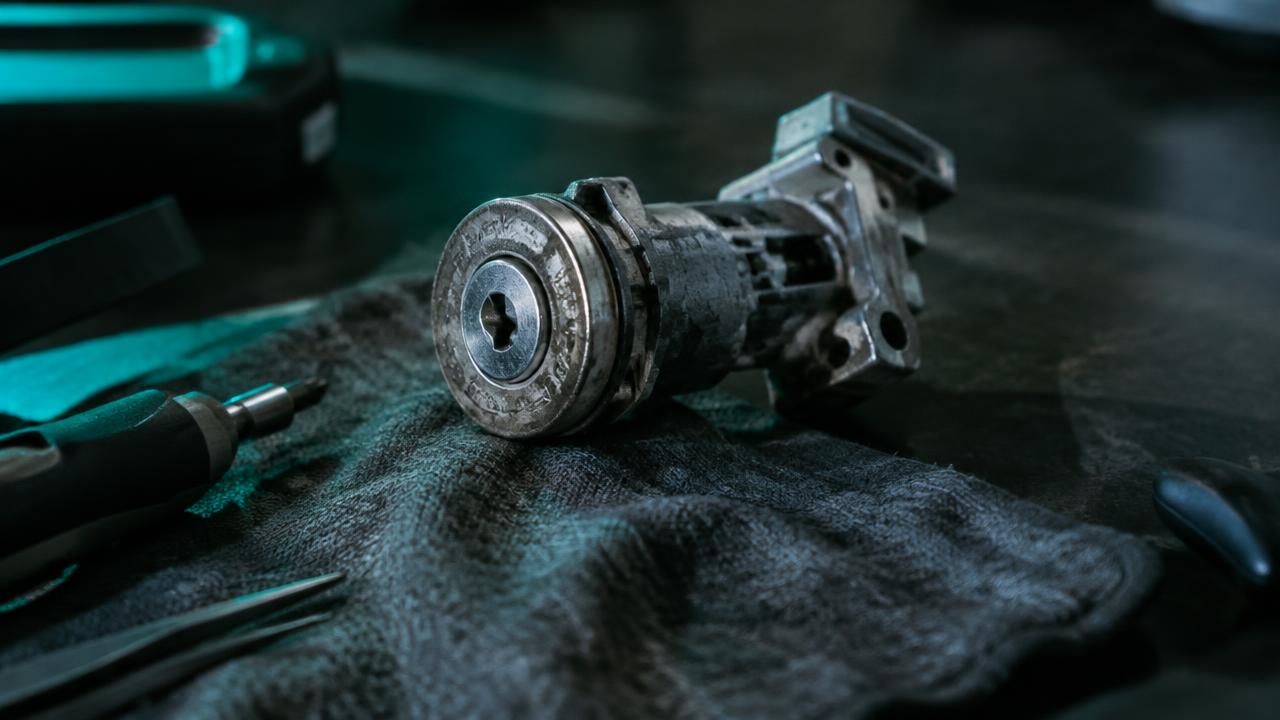
A worn barrel usually announces itself gradually, and it behaves the same way with every key you own.
The pattern to look for is progressive: the key needs a little more encouragement each month, works better cold or better warm, or sticks in one position on the way back. When both keys behave identically, the lock is the common factor.
Depending on the vehicle and the wear, that can mean a repair to the barrel or a replacement. Where a barrel is replaced, we keep the vehicle's existing key working with it wherever the design allows, so you are not left carrying two different keys.
Why Force Is The Worst Option
The instinct when a key will not turn is to push harder. It is the single most expensive reaction available.
A key blade is not designed to be a lever. The wafers inside a barrel are small and the metal is softer than it feels, so the load goes into the weakest point — usually the shoulder of the key, which shears off inside the lock. What was a sticking barrel becomes a barrel with a broken key in it, and the extraction is now part of the job.
Two-handed turning and pliers make it worse in a different way. Excess torque can twist the barrel out of alignment or damage the steering lock mechanism behind it, and that is a substantially larger repair than the fault you started with.
The alternative costs nothing. Relieve the load on the steering wheel, confirm the gear selector is fully home, try the spare key, and if it still will not turn, stop. A barrel that is worn but intact is straightforward to sort. One that has been forced is not.
Narrowing Down The Cause
Four quick checks that tell us — and you — a great deal before anyone attends.
Does the spare key turn?
If it does, the original key is worn and the barrel is probably fine. That is the cheapest outcome of this list.
Does the wheel move at all?
A steering lock under tension is the most common cause. Gentle pressure on the wheel while turning the key releases it.
Is the car in Park?
Automatics will refuse to release the key or turn the barrel unless the selector is properly seated in Park.
Has it been getting worse?
Gradual stiffness over weeks points to a wearing barrel. A sudden refusal on an otherwise fine lock points elsewhere.
Key and ignition questions
Get a free quote in two quick steps
Send your details and we'll call you back with a price. For anything urgent, just call.
- Price explained before any work
- No upfront payment
- Deal direct with the technician
Key stuck or refusing to turn?
Tell us whether the spare behaves the same way — that one detail usually tells us whether we are bringing a key or an ignition solution.
“Alec provided a speedy service at a good price after we bought a van that had no spare key, it was a complex job involving a OBD protector which he solved no problem. Would recommend.”