
How Immobilisers Work And Why They Block A New Key
The immobiliser is the part of your car that decides whether an engine start is allowed. Understanding it explains almost every "the key turns but nothing happens" call we take.
- AVG Same Day Service
- DBS Checked
- 5★ Reviews
Not A National Company
A local business, not a call centre.
Real Local Professionals
Locals, not technicians sent by a middle-man company.
No Inflated Pricing
National companies often mark prices up 2–3x. We don't.
Deal Direct With The Technician
No wondering who or when. It's always us.
It is an electronic gate between your key and the engine
An immobiliser holds a list of key identities the vehicle accepts. Present a key, and the system checks its chip against that list. If it matches, fuelling and ignition are allowed. If not, the engine may crank but will not run — which is exactly what the system is designed to do.
Why Every Car On A UK Driveway Has One
Electronic immobilisers became standard on new cars in the mid-1990s, and vehicle theft by hot-wiring largely disappeared with them.
Before immobilisers, starting a car was a mechanical problem. Afterwards it became a cryptographic one, and the barrier moved from the steering column to the vehicle's electronics.
That is good news for owners and the reason key work became specialist. The same system that stops a thief also stops an unregistered key you paid for, and there is no way around it other than registering the key properly.
What Has To Line Up For The Engine To Run
Several parts have to agree. The specific arrangement varies by manufacturer, model and year, but the principle is consistent.
The key's chip
Holds the identity. Damage, water ingress or a chip that was never registered all produce the same outcome: no recognised answer.
The reader
The coil or antenna that energises the chip and receives its reply. A failed reader means even a perfectly good key goes unheard.
The security module
Holds the list of accepted keys and makes the decision. On many cars this is also where a new key is registered during programming.
The engine management
Receives the permission. Where the two are paired to each other, swapping in a second-hand module from another car causes its own problems.
Why An Immobiliser Refuses A Key That Looks Right
Almost always one of four reasons: the key was never registered, the chip has failed, the reader has failed, or the vehicle has a power or communication fault.
A key that was cut but never coded is the most common. It fits, it turns, and the car ignores it — which is the system working as designed.
Chip failure is less common but real, usually after the key has been dropped repeatedly or has got wet. Reader failure shows up as a car that starts only when the key is held in an unusual position, or that starts intermittently.
A weak vehicle battery can also cause an immobiliser fault message. Low voltage disrupts communication between modules, and the security system fails safe rather than guessing. It is always worth ruling out before assuming an expensive fault.
What Not To Do When The Immobiliser Light Stays On
Do not keep cranking, and do not start pulling fuses or disconnecting the battery on advice from a forum.
Repeated failed start attempts can put some systems into a lockout that has to be cleared, and disconnecting the battery mid-fault can leave modules in a worse state than they started. Neither makes the diagnosis easier.
Try the spare key first — that single test separates a key fault from a vehicle fault faster than anything else. Then get it read properly. Fault codes from the security system tell us whether the key was seen at all, which is the difference between a key job and a vehicle repair.
When The Immobiliser Is Not The Problem
A car that will not start is blamed on the immobiliser far more often than the immobiliser deserves.
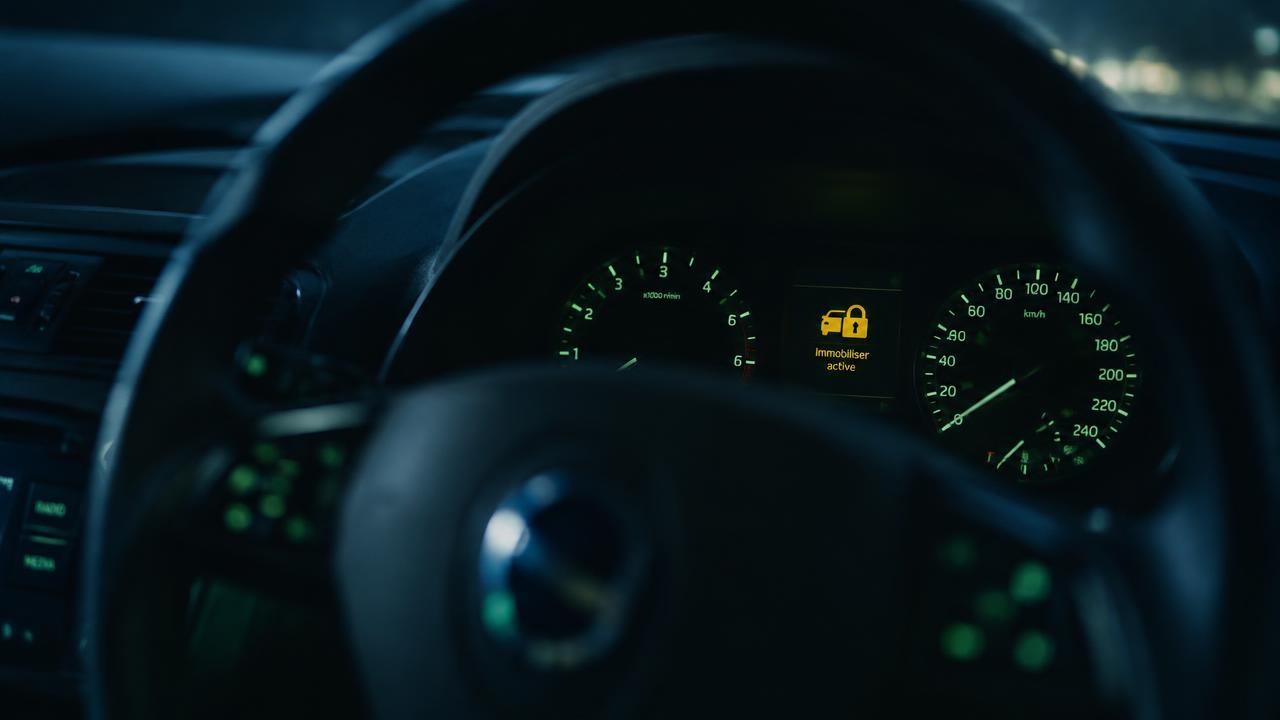
The distinguishing detail is what the engine does. An immobiliser fault typically lets the starter turn the engine over normally while fuelling or ignition is withheld, and the dashboard shows a key or padlock symbol. It sounds healthy and simply will not catch.
A flat or failing vehicle battery behaves differently. Lights dim, the starter labours or clicks, and the dash may flash several warnings at once. That is electrical supply, not security, and jump-starting will usually prove it in under a minute.
Fuel, starter motors and sensors produce their own signatures, and none of them are helped by a new key. It matters because a key is the more expensive guess. If the immobiliser light is not showing and a second key behaves the same way, the problem is very likely mechanical and belongs with a garage rather than a locksmith.
We would rather tell you that on the phone than attend and charge you to hear it on your driveway.
Immobiliser Symptoms And What They Point To
A rough guide to what the car is telling you.
Cranks, will not fire, key symbol lit
Classic immobiliser refusal. Try the spare key first — if the spare starts it, the original key is the fault.
Starts then cuts out after two seconds
Often a key the system half-recognises. Worth investigating before the car is driven anywhere that matters.
Intermittent, worse in cold or damp
Frequently a damaged key or a marginal aerial ring around the ignition rather than the immobiliser module itself.
Nothing at all, no lights
Not security. This is supply — the vehicle battery, its terminals or the main fusing.
Immobiliser questions
Get a free quote in two quick steps
Send your details and we'll call you back with a price. For anything urgent, just call.
- Price explained before any work
- No upfront payment
- Deal direct with the technician
Car cranking but refusing to run?
Tell us what the dashboard shows and whether the spare key behaves differently — that is usually enough for us to know what we are coming to.
“Great lad just sorted out my wife's electronic steering lock on Mercedes highly recommend.”