
Why Has My Key Fob Stopped Working?
Work through the cheap causes before assuming the key has died — most fobs we are called to are fixable, and some need nothing more than a battery.
- AVG Same Day Service
- DBS Checked
- 5★ Reviews
Not A National Company
A local business, not a call centre.
Real Local Professionals
Locals, not technicians sent by a middle-man company.
No Inflated Pricing
National companies often mark prices up 2–3x. We don't.
Deal Direct With The Technician
No wondering who or when. It's always us.
Battery first, then the key itself, then the car
Start with a fresh battery of the correct type — it explains most dead fobs. If that fails, test the spare: if the spare works, the fault is in your key. If neither works, suspect the vehicle's receiver or a flat vehicle battery rather than two keys failing at once.
The Battery, Properly Checked
Most fob faults are a battery, but a surprising number of fobs fitted with a new battery still fail because of how it was fitted.
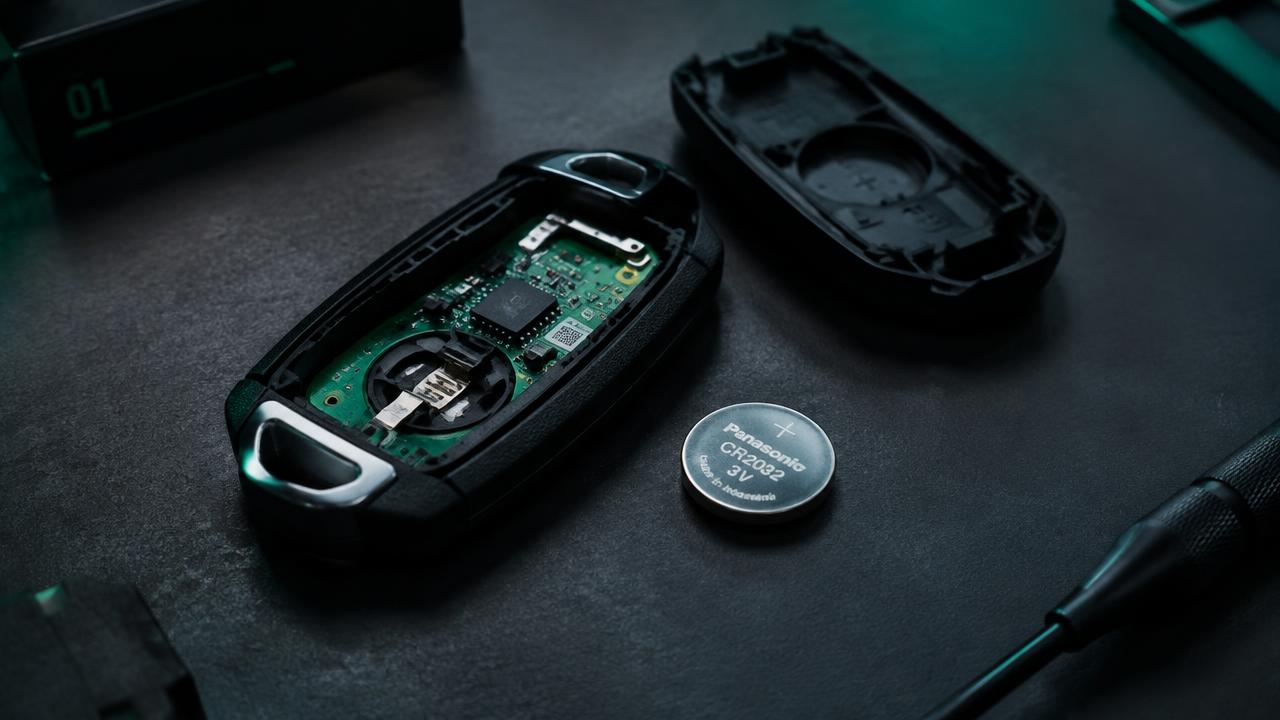
Use the exact cell type printed inside the fob, and buy it somewhere with reasonable turnover — coin cells lose capacity sitting on a shelf. Avoid handling the faces of the cell, as skin oils on the contact surfaces cause intermittent behaviour.
Check the contacts inside the fob while it is open. Corrosion, a bent spring or a contact pushed flat will produce exactly the same symptoms as a dead battery. Gentle cleaning fixes a good number of keys that owners had written off.
Declining range over weeks is the classic slow battery failure. Sudden total silence more often points at physical damage.
If The Battery Is Not The Answer
Four further causes, in the order they are worth investigating.
Water damage
A washing machine cycle, a rainy pocket or a dropped-in-a-puddle moment causes corrosion on the circuit board. It can work for days afterwards and then fail. Sometimes recoverable, often not.
Worn buttons or broken solder
Years of pressing wears the contact pads, and dropping the key can crack solder joints. A button that only works when pressed hard or at an angle is a mechanical failure, not a signal problem.
Lost pairing
Less common than the internet suggests, but it happens — often after a battery disconnection or electrical work. The key can usually be re-registered rather than replaced.
Vehicle-side faults
A failed receiver, a blown fuse or a flat vehicle battery will stop every key working. If both keys are silent, look at the car before buying a new fob.
Radio Interference Is Real, But Rarely The Whole Story
If your remote fails only in one specific place, the location is the suspect rather than the key.
Some car parks, industrial estates and spots near transmitters carry enough radio noise to swamp a key fob. The tell-tale sign is a key that works perfectly everywhere else and fails reliably in the same location.
The workaround is simple: use the blade in the driver's door to lock and unlock while you are there. If the problem follows the car everywhere, it is not interference.
What To Do Right Now If You Are Standing At The Car
You can almost always get in and get going, even with a completely dead fob.
Every key has a mechanical way in. On a remote key it is the blade; on a smart key it is the emergency blade hidden in the body, and the driver's door usually has a keyhole, sometimes behind a small cover on the handle.
Be ready for the alarm to sound when you open a car that way — the vehicle has not yet seen a valid key. Getting in and presenting the key to the start system normally silences it.
For starting a keyless car with a dead fob, use the backup position described in the handbook: a marked spot on the column, a slot in the console, or holding the key against the start button.
When A Battery Is Not The Answer
A fresh cell fixes a good proportion of dead fobs. Here is how to tell whether yours is one of them.
Range is the clue. A battery on the way out usually shortens the distance the fob works from before it stops entirely, so if last week you had to stand at the bumper and today nothing happens at all, a battery is the likely explanation.
A fob that died instantly, with full range the day before, points elsewhere — a cracked circuit board, a failed button contact, water damage, or a fob that has lost synchronisation with the vehicle. Buttons that feel spongy or that only work when pressed at an angle are mechanical wear inside the case, and a new cell will not touch them.
There is also the vehicle's side of the conversation. If neither key operates the doors but both start the engine, the receiver or the central locking is a more likely suspect than two keys failing on the same afternoon. Checking the spare is the fastest way to tell these apart, and it costs nothing.
Changing A Fob Battery Without Damage
Four things that prevent the usual self-inflicted problems.
Note the orientation
Photograph the cell before removing it. Fitting a coin cell upside down is the most common reason a fresh battery appears dead.
Use a plastic tool
A guitar pick or trim tool opens most cases. A screwdriver marks the seam and can crack the clips that hold it shut.
Do not touch the board
Fingers leave moisture and oil on contacts. Handle the case, not the electronics inside it.
Buy the right cell
The number is printed on the old battery. Near-identical sizes exist and a loose fit causes intermittent faults that look like a failing key.
Key fob questions
Get a free quote in two quick steps
Send your details and we'll call you back with a price. For anything urgent, just call.
- Price explained before any work
- No upfront payment
- Deal direct with the technician
Fob dead after a new battery?
Send the make, model and what the spare key does. We will tell you whether it is a key repair, a re-pair, or something on the car.
“Awesome service after I lost my only key one evening offered to come out, took much of the central console apart and sorted the issue in what seems like no time. Excellent skills and comms throughout; absolutely recommended. Top job!”